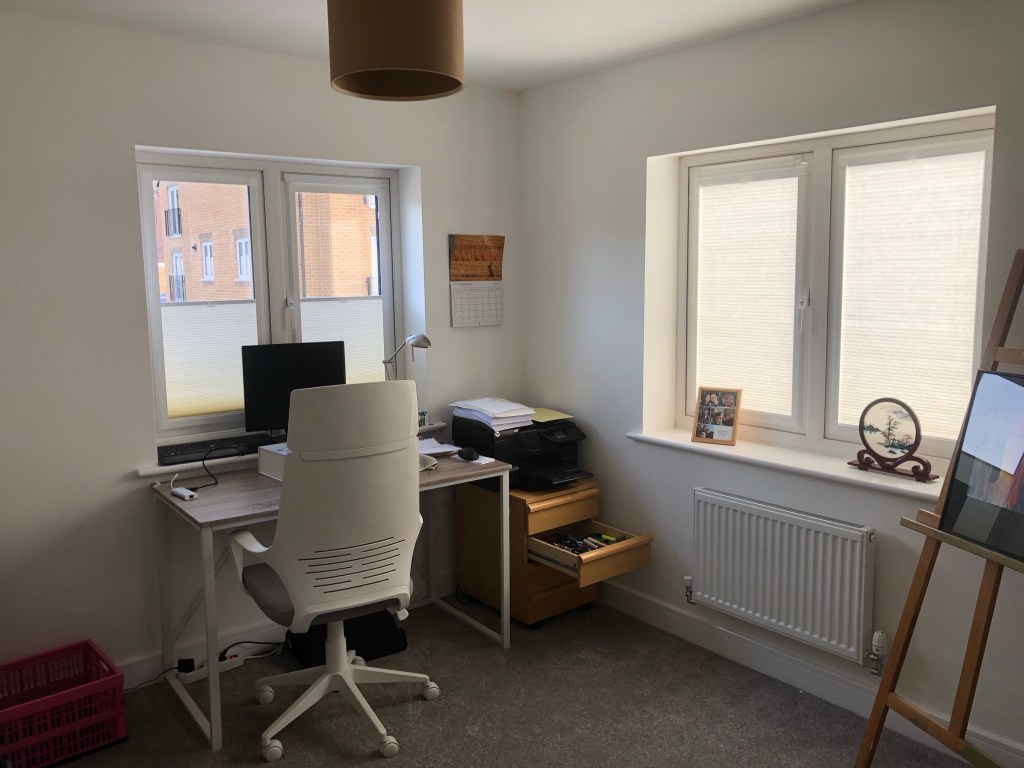
Versatile design
saves 32%* on heat loss
compact and contemporary
*see heat retention section for specific details
Single pleats and Honeycomb explained..
Pleated blinds (or plisse as they are known on the continent) can be grouped into 2 categories which, when fitted, are similar from an aesthetic standpoint. Both variants are operated in the same manner but the fabrication is different.
‘Single pleated’ is the original design and consist of one layer of fabric which is neatly folded in a concertina fashion. The fabric used is, in most cases, reflective on the back and serves to repel solar energy.
‘Honeycomb’ (or cellular blinds as they are known in the US) are in essence 2 single pleats, back to back, creating a profile which resembles a honeycomb. This creates an air pocket inside the blind which acts as a barrier against heat and noise.
Best Blinds for Energy Efficiency?
Many window coverings are touted as being energy saving and this is true to a varying degree depending on their individual properties and how they are fitted. The two results that that we are wanting to achieve are heat reduction in summer and heat retention in winter.
Heat reduction
Each individual fabric has different qualities with regard to how it performs against solar energy. These are divided into 3 values expressed as a percentage;
R% – Reflection, energy reflected away
T%- Transmission, energy allowed to pass through the fabric
A%- Absorption, energy retained by the fabric
To achieve the best heat reduction one can opt for a block out fabric. These materials, also known as blackout, are available in both single and honeycomb pleats and are most effective at keeping the sun out. There is a caveat, solar energy also encompasses light! If you wish your chosen room to be light you will have to sacrifice a bit of heat coming in as well. This is where the light filtering fabrics come into their own, providing some light but still reflecting a great deal of energy.
Some of the dense single pleats perform on par with the top honeycomb fabrics for heat reflection due to the aluminium coating that faces outward. That being said, Honeycomb will generally outperform single pleats for transmission due to the thermal barrier created by the air pocket they possess.
Heat retention
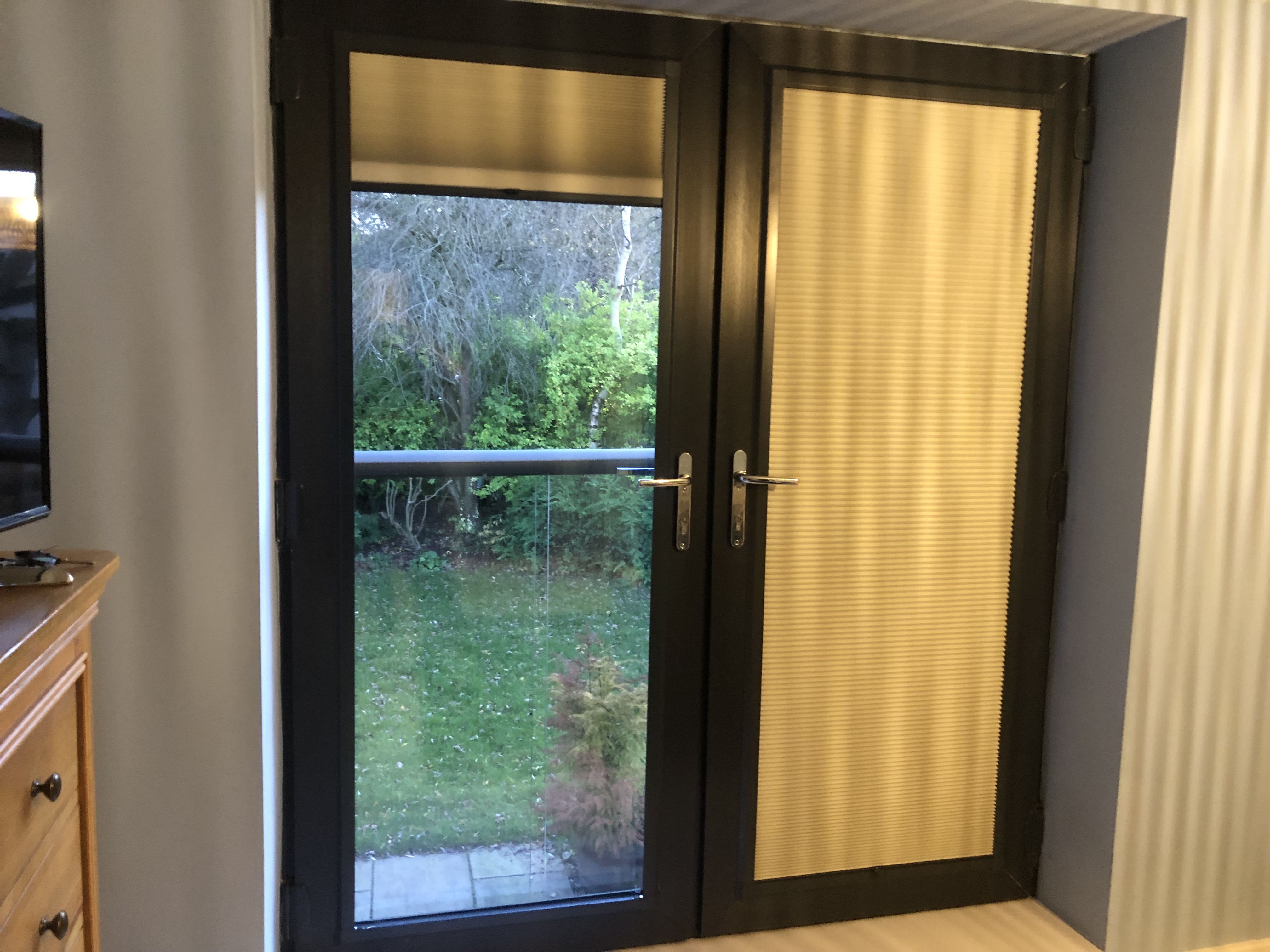
When it comes to reducing the heating bills there is a clear winner! As you might have guessed the cellular structure of the Honeycomb acts as a great insulator against your windows keeping that hard earned heat in your house in the depths of winter. A study done by Salford university has recently showed a saving of heat loss at 32% based on Louvolite blackout honeycomb fabric fitted in a perfect fit frame (example of that product fitted by us below). Its worth mentioning that this study used modern, low E double glazed windows so if you have older double glazing this figure will most likely be higher. Click this link to the BBSA Website to learn more.
Tensioned or Freehanging?
Perfect fit frames
The most popular choice for our customers when it comes to pleated blinds is the ‘perfect fit’ option. These frames are fitted neatly into the bead and cover the gaps round the edge of the blind. The frame also provides an internal profile which is 90 degrees from the window this provides an ideal contact point for the rails allowing optimal coverage.
Cords woven through the blind are attached to springs located in the rails, this keeps the blind under tension and allows for easy operation by sliding the rail up or down to your desired position.
Your pleated blind can be configured ‘top down’ or ‘bottom up’ with one rail or ‘floating’ with 2 rails for more modifiable set up.
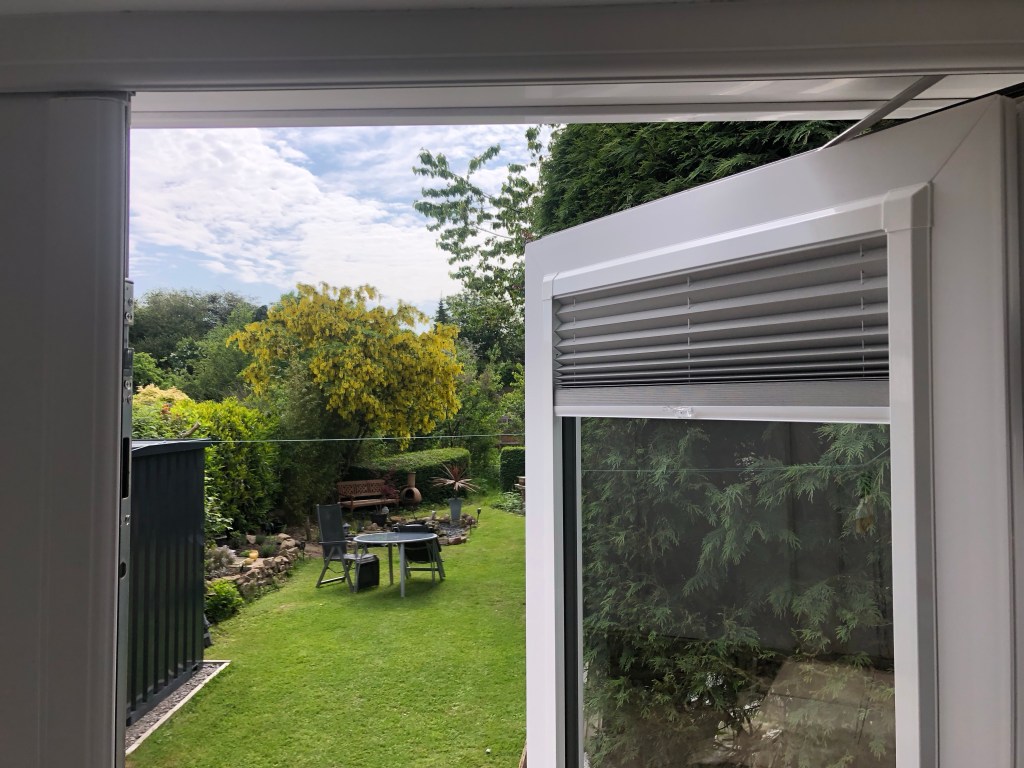
Perfect Fit Universal is another innovative product which provides a frame to secure the perfect fit frame into. This can be fixed in or around the recess creating more opportunities to use the perfect fit system. A good example of where this might be used is over a recess which houses a skylight.
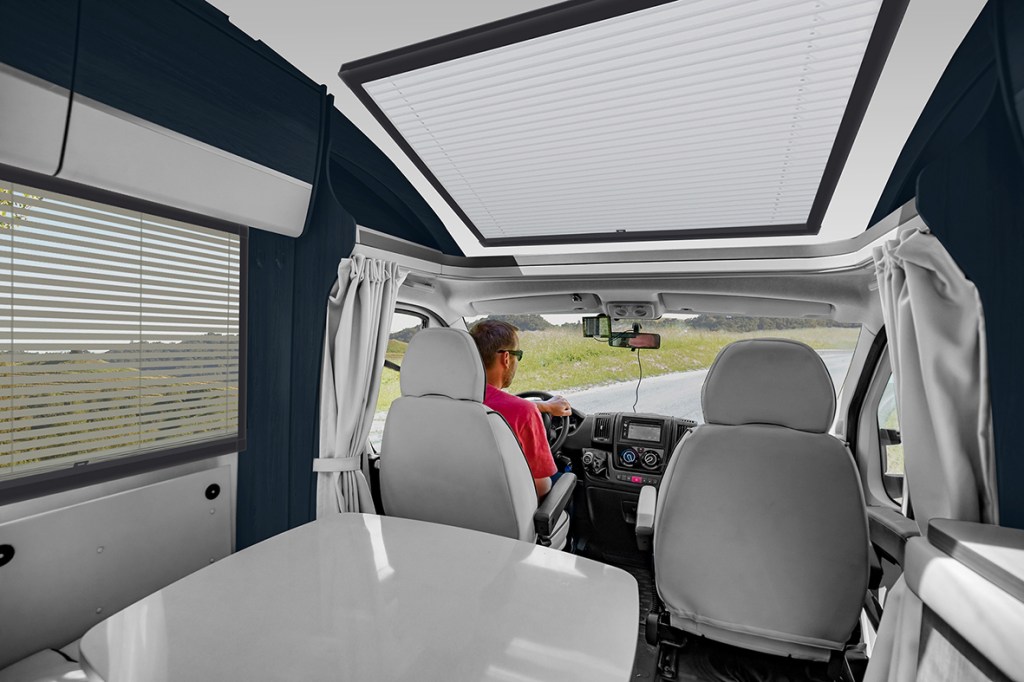
frameless
Frameless pleated blinds uses the same tensioned system as above just without the perfect fit frames. Instead, the blinds can be fixed to the beading around the glass with small screws or face fixed onto the frame with L shaped brackets. Not all beads are suitable to fit to, there must be enough depth to fit the blind in the recess next to the glass and if it is an angled bead it is best if it is closer to 90 degrees to achieve best closure. There is a ‘curved profile’ rail available which allows the blind to close fully on most curved beads
Fitting inside the bead is sometimes the preferred method on bi-fold doors with deep square beads. This can allow the doors to be folded fully back without worrying about crushing the perfect fit frames. There is still the tab which operates the blind to consider but it is usually manageable as the frames are usually the pinch so
Some doors and windows have little or no beading on the inside, for example the wooden cabin used for a garden office below. This scenario calls for L shaped, face fix brackets fitted directly to the frame. Some customers prefer the look of pleated blinds fitted in this manner as you can achieve better coverage than inside the beading. Another advantage is that the fabric can be moved fully out of the way for easy cleaning.
Free hanging
For larger windows the best suited system is free hanging. The tensioned system has a width constraint of 1500mm dependant on drop and also requires the user to be able to reach the tab handle. This is not always possible on taller windows. Free hanging blinds can be open and closed via cord lock, chain or motor and fitted inside or outside the recess (most commonly inside the recess with cord lock). Chains and motors call for a larger headrail to house the components while cord lock allows for the same slimline option as tensioned.
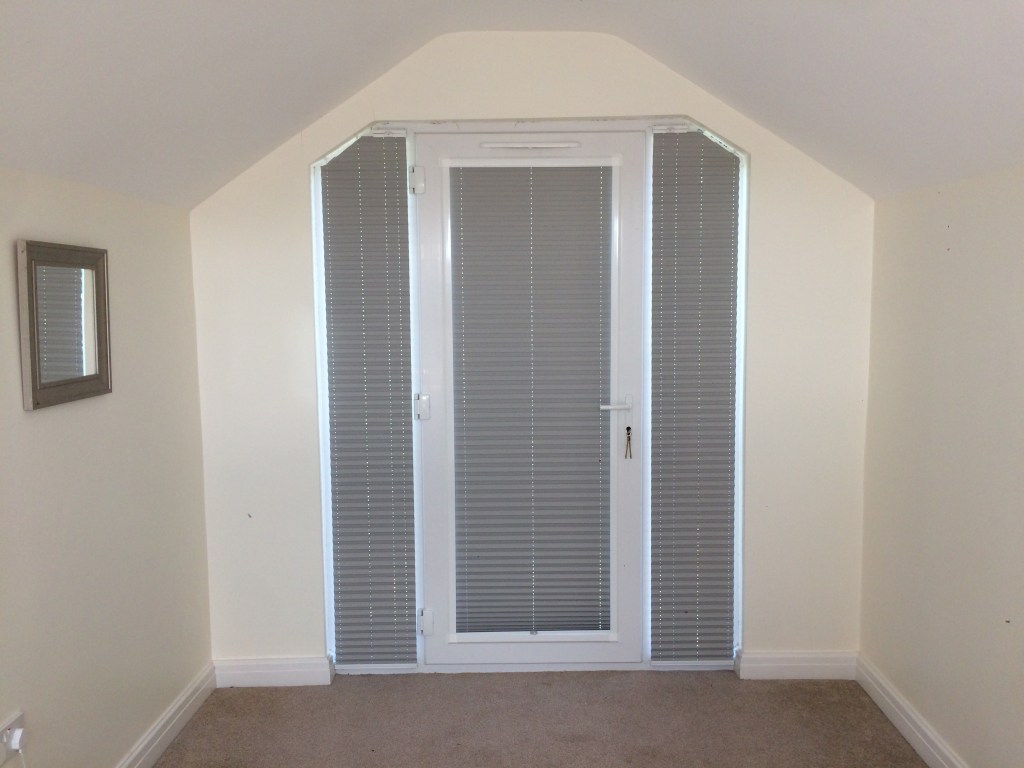
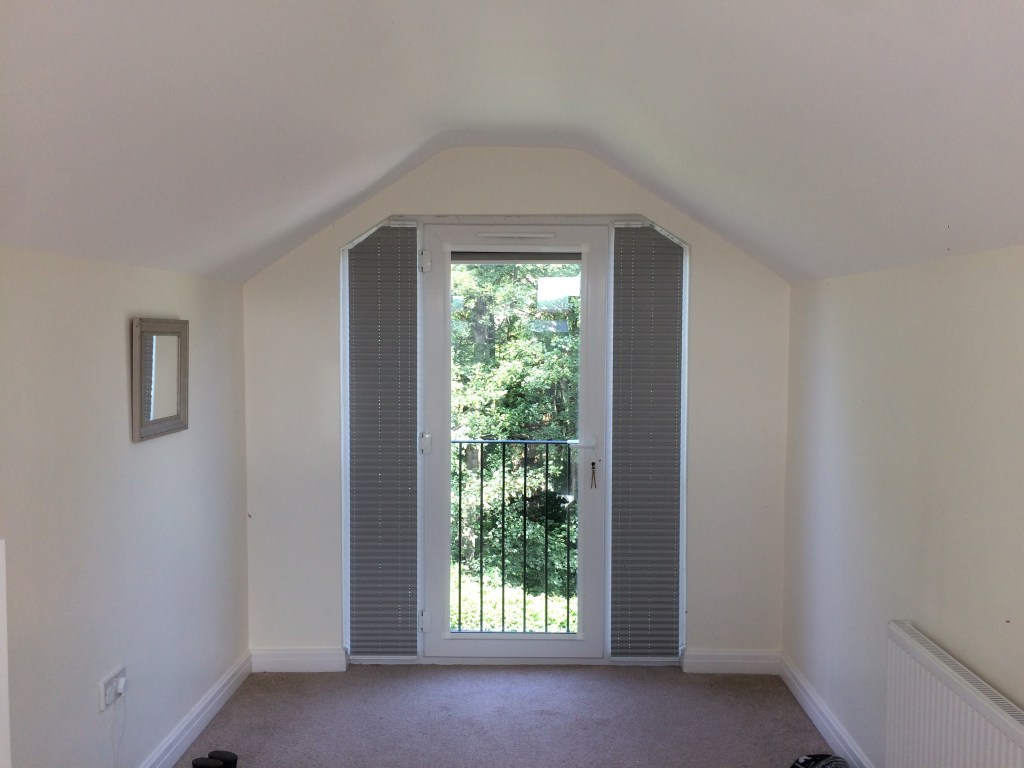
Shaped Pleated
Here we have the most common type of blind used for a conservatory roof.Combine the tensioned system outlined above with subtle wires running through the fabric to keep it taut and you can use it on anything from an apex to a flat roof over large spans. These conservatory blinds are usually left ‘closed’ across the glass and drawn back to access for cleaning or maybe to let some heat in on a sunny winter day.
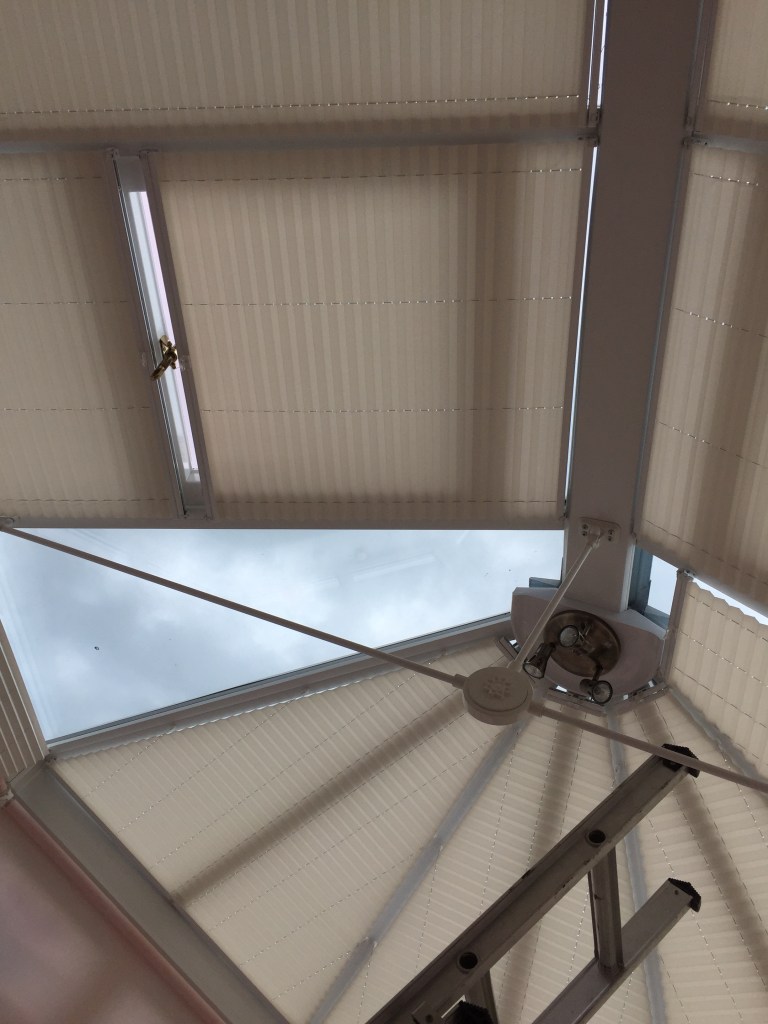
As the name suggests, shaped pleated blinds can be manufactured in an array of polygons. designed to cater to the complex 2D sections of glass which make up a 3D roof.
Shaped pleated blinds can make your conservatory bearable in summer and also provide a welcome acoustic treatment to the space making it not just look but sound cosy.
Other considerations
The main difference visually is that the cords which run vertically though the pleats can be hidden in the centre of the honeycomb profile whereas the single pleats have small holes visible. These holes are very small and do not effect privacy so much but do let a small amount of light and airflow through. Anecdotally, single pleats are sometimes considered the harder wearing option due to the fabric generally being stiffer and more dense. They are also regarded by some as being sightly easier to clean as they usually have a smoother texture.
 charisma blinds